istek vs Postman for gRPC
Postman is a collaborative API platform in which gRPC is one of many request types. istek is a native Mac app that does only gRPC, keeps everything on your machine, and costs one payment.
Updated
| istek | Postman | |
|---|---|---|
| Scope | gRPC only | REST, GraphQL, gRPC, WebSocket and more, plus testing, mocks and monitors |
| Platforms | macOS 14 or later on Apple Silicon | macOS, Windows, Linux and the web |
| Server reflection | Yes, v1 with v1alpha fallback | Yes, loaded automatically when the server supports it |
| Streaming | All four call types | All four call types |
| Variables | {{name}} in the body, metadata and address; secret values in the macOS Keychain | {{name}} at global, collection and environment scope; sensitive values in Postman Vault |
| Collaboration | None; files stay on your Mac | Shared workspaces and collections |
| Where requests are sent from | Your Mac, directly | Postman recommends its Desktop Agent for full gRPC support |
| Price | $14.99 once | Free and paid plans |
A rejected call, as istek shows it
Calling Greeter/SayHello with the name mallory on a local test server is refused with status 7, PERMISSION_DENIED. The status, the server's message and a custom trailer all arrive in the trailers, and istek lists them beside the response.
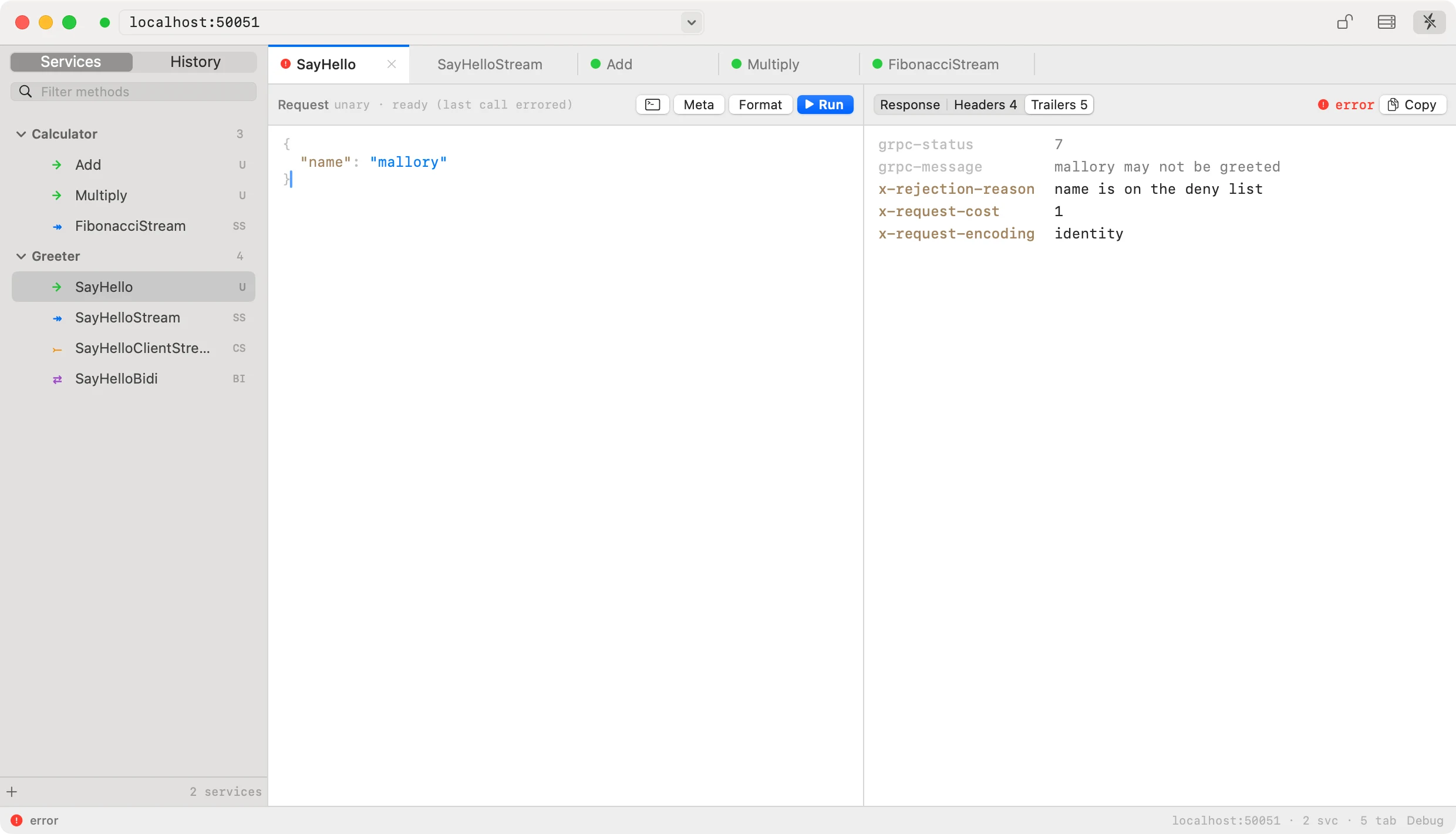
Whichever client you use, check that a failed call still shows its trailers, because the reason for a refusal usually travels there rather than in a response body.
Choose Postman if
- Your team shares collections, or you need more than gRPC.
- You need scripted tests, mocks or monitors.
- Anyone involved is not on a Mac.
Choose istek if
- You want a single-purpose gRPC tool that opens instantly.
- You want no account and no telemetry, with tokens and secret variables in the Keychain.
- You want each response's headers and trailers beside it, failed calls included.
- You would rather pay once.